
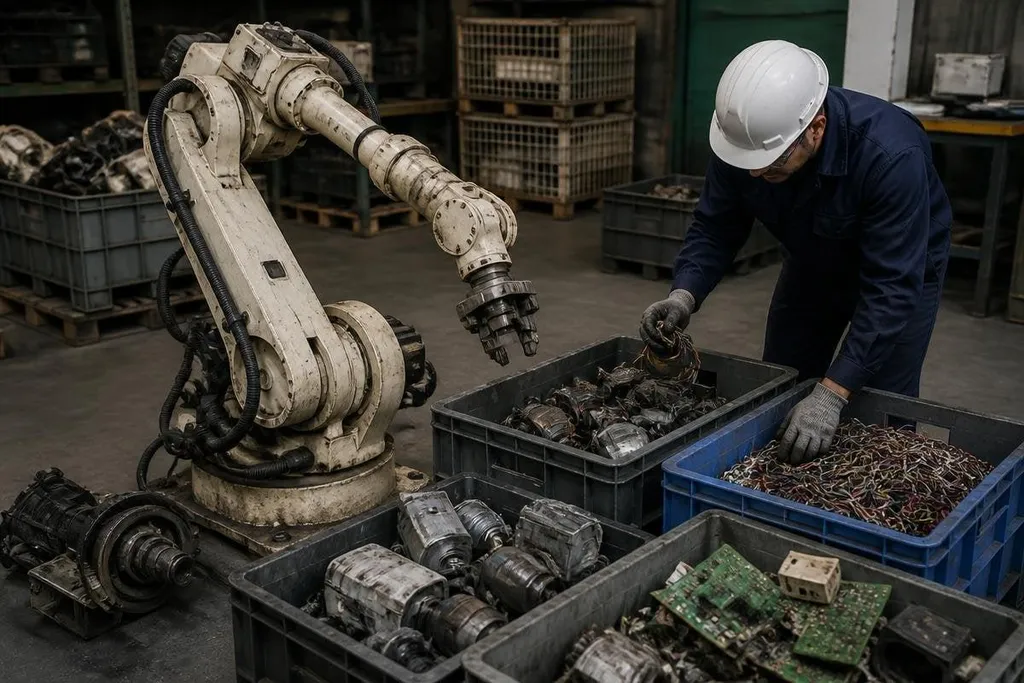
An old robot is rarely one piece of waste. It is a mix of metal, wiring, motors, batteries, circuit boards, sensors, and software-linked parts. Recycling works best when each part gets the right route before anyone reaches for a shredder.
If you manage retired automation equipment, the first question is practical: can the robot be repaired, stripped for parts, or sent to a specialist recycler?
Quick read
- Reuse the whole robot when its controller, motors, and frame still work
- Remove batteries and other hazardous parts before material sorting
- Keep circuit boards and cables out of ordinary metal recycling
Start with reuse
Recycling is not the first step for every retired robot. A working arm, mobile base, gripper, or controller may have more use as a spare part than as scrap metal.
Check the robot’s service records, error logs, and parts supply before taking it apart. A machine with a damaged sensor may still contain working motors, gearboxes, drives, or joint assemblies that can support another unit.
This matters most for older systems built from standard parts. A replacement controller or motor can keep a robot running, while a full replacement would require new wiring, safety checks, and programming.
I’d keep a repairable robot intact until its likely reuse value is clear.
What has to be separated
The frame often contains steel or aluminum. Those materials can enter normal metal recovery streams after the machine has been stripped. The route changes once the frame is mixed with batteries, boards, cables, or fluid-filled parts.
Lithium-ion batteries need separate handling because damage, heat, or crushing can cause a fire. Lead-acid batteries, where used, follow their own collection route. Remove the battery pack before cutting or compacting the robot.
Circuit boards contain metals that specialist recyclers can recover. They also contain resins and other materials that ordinary scrap yards may not handle well. Cables are worth sorting too, since their copper conductors sit inside plastic insulation.
Motors and gearboxes can often be tested for reuse before they are sent for metal recovery. That check takes time, but it can save the cost of buying a matching part for another robot.
Why the software still matters
Physical recycling does not erase the robot’s software or stored data. Controllers, cameras, storage devices, and network equipment may hold production records, maps, passwords, or customer information.
Before disposal, wipe storage and reset network credentials according to your site’s rules. Keep a record of which controller, drive, and battery left the site, especially if the robot worked around private production data.
A used robot’s resale value depends on its controller, drives, battery, and service records. Robot24.com robotics coverage can help you compare those parts with the jobs an older robot may still fit before a recycler prices the unit by weight.
Where recycling gets hard
The main problem is mixed construction. Its parts may include bonded materials, sealed gearboxes, glued sensor covers, or custom cable assemblies. Taking those parts apart can cost more than the material is worth.
Safety parts need care as well. An arm may store energy in brakes or springs, and a mobile robot may contain several battery modules. Trained technicians should isolate power, release stored energy, and follow the maker’s service instructions before disassembly.
Old equipment may also lack clear records. If nobody knows the battery type, coolant, lubricant, or internal components, the safe route is to pause and identify them before the robot enters a waste stream.
A practical disposal checklist
Use this order when a robot leaves service:
- Record the model, serial number, condition, and last known use.
- Test repairable parts before removing them from the robot.
- Isolate every battery and send it to the correct collection service.
- Wipe storage, remove credentials, and document the reset.
- Separate steel, aluminum, copper cable, circuit boards, and mixed plastics.
- Ask a specialist recycler about sealed, damaged, or unidentified parts.
The best route depends on condition, design, and local waste rules. A working robot may become a donor unit, while a damaged one may need careful dismantling and several separate material streams.
Old robots can be recycled, but the useful decision comes earlier: identify what can work again before deciding what can be melted down.